
Le droit est-il au masculin singulier ? Femmes, territoires, et pluralisme juridique.

par Athena Weicker, étudiante au 2e cycle en common law et droit transnational (Juris Doctor)

Ce billet a d’abord été conçu dans le cadre du cours Pratique Transnationale, sous-supervision de Lauren Cavallier (LLB, LLM).
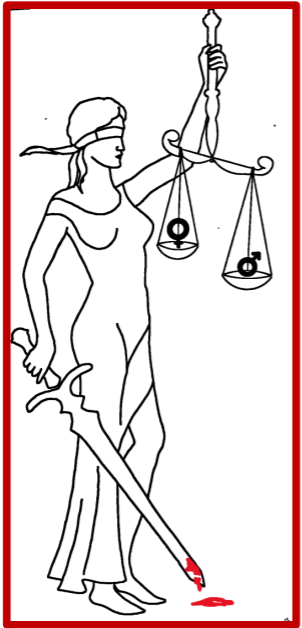
« L’homme est la mesure de toutes choses ». [1]
Ou devrais-je plutôt dire : « Les hommes sont la mesure de toute chose. » [2] ?

Un simple passage du singulier au pluriel. Un passage de l’universel au particulier. Mais surtout, un changement de perspective. Quelle perspective le droit choisit-il comme réalité juridique ? Celle du pluriel ou plutôt celle du singulier ?

Puis, de quelle réalité parle-t-on ? De la réalité étatique ? Internationale ? Ou bien, de la réalité autochtone ? Les réalités sont multiples. Le droit, quant à lui, n’est pas une notion uniforme : il se déploie à travers une pluralité d’ordres juridiques. Il est différent : d’une personne à l’autre et d’un
territoire à l’autre.

En somme, une chose est claire : le droit ne se contente pas de simplement régir le monde ; il le nomme, le catégorise et surtout, le définit. Il définit les sujets, que ce soient des personnes, des territoires ou encore des patrimoines. Il choisit ainsi ce qui mérite d’être juridiquement reconnu et protégé. Or, choisir une définition signifie choisir une perspective. Cette perspective ne peut être unique dès lors que le droit étatique rencontre les ordres juridiques autochtones. C’est précisément cette confrontation de perspectives qui fait surgir une question à deux égards : par rapport à la personne (I) et par rapport au patrimoine (II).

I. L’unique définition de la personne juridique

A. La femme : une catégorie juridique masculine ?

Il suffit de regarder les textes : « Tout être humain possède la personnalité juridique ; il a la pleine jouissance des droits civils. » [3] L’article premier du Code civil du Québec pose un principe universel : toute personne est reconnue comme sujet de droit.

Être une personne juridique signifie être titulaire de droits et d’obligations. Le droit se veut neutre et universel, ne distinguant pas entre les personnes. Pourtant la réalité est toute une autre. Cette neutralité n’est qu’apparente. À côté d’être une personne juridique ou non, l’individu est appréhendé par une autre catégorie : celle du sexe.
Être homme ou femme. Selon Ngaire Naffine, « Se voir attribuer un sexe juridique […] c’est être défini juridiquement par les caractéristiques que nous sommes supposés partager avec la moitié de la population mondiale, plutôt que d’être considéré comme un individu à part entière. » [4]

Il existe un paradoxe important : le droit individualise la personne tout en la catégorisant selon son sexe. Une illustration de cette problématique est la Convention sur l’élimination de toutes les formes de discriminations à l’égard des femmes. [5] Il s’agit d’un instrument international qui sert à protéger spécifiquement les femmes. Si le droit s’appliquait indistinctement à toutes les personnes, pourquoi aurait-on besoin d’une Convention qui protège les femmes en particulier ?

D’autant plus, la catégorie juridique féminine ne s’est pas construite de façon autonome ni de façon indépendante. Historiquement, elle a été déterminée par référence à l’homme. Cette logique s’est même ancrée dans le langage. En effet, jusqu’en 2020, le Oxford Dictionary contenait des synonymes de « femme » tels que « garce », « salope », « amante » ou encore « maîtresse ».[6] Non seulement s’agit-il de termes discriminatoires, vulgaires et amplement rabaissant, mais ce sont surtout des termes qui définissent la femme par la relation qu’elle entretient avec l’homme.
Denise G. Réaume affirme que « La femme a été définie comme étant, presque, tout ce que l’homme n’est pas. » [7] La personne féminine n’est pas une catégorie juridique à côté de celle de l’homme. C’est une sorte de second terme, une opposition dont l’homme est la référence. Dans Brooks v. Canada Safeway [8], puis dans Fraser v. Canada la Cour énonce que « l’emploi à temps plein sans interruption est un régime de travail typiquement masculin ».[9] L’homme devient modèle du travail à temps plein sans interruption. Dans l’affaire Fraser, le job-sharing était considéré comme un travail à temps partiel, ce qui ne faisait pas toucher aux mêmes pensions que celles d’un travail à temps plein. Le problème est que le job-sharing est une façon de travail majoritairement exploitée par les femmes. La discrimination est indirecte. Ainsi, la neutralité d’une règle ne garantit pas la neutralité de ses effets. Réaume écrit que
« L’exclusion implicite s’opère par intermédiaire de règles ou de décisions qui sont, en apparence, neutres quant au sexe, mais qui reposent néanmoins sur une norme masculine. » [10]

Le droit paraît neutre et universel sur la surface. Mais certaines règles sont construites autour d’expériences précises, celles qui sont majoritairement masculines. Le droit ne prend donc pas en compte les différentes expériences et ne peut être véritablement « neutre ».

B. La femme juridique est blanche

Souvent, les théories et essais féministes parlent au nom de « toutes les femmes ». Mais de quelle femme parle-t-on ? La femme juridique universelle fait-elle vraiment référence à toutes les femmes ou repose-t-elle sur une expérience bien particulière ?

Si la femme est déterminée par rapport à l’homme, encore est-elle amplement généralisée. Derrière le masque de la femme universelle, se cache un visage blanc et occidental. Cette difficulté devient importante dès lors que l’ordre juridique occidental rencontre des traditions autochtones.

Ainsi, Miriam Bak McKenna et Matilda Arvisson écrivent que « Les relations intimes ont joué un rôle central dans l’imposition des lois coloniales à des sociétés dont les systèmes socioéconomiques et juridiques étaient pourtant profondément différents. » [11] Les relations familiales, qui sont censées être des rapports privés, sont devenues un instrument de colonisation. De nouvelles conceptions juridiques ont été imposées aux peuples autochtones dans le domaine de la famille et de la propriété.

Dans certaines Nations une tradition juridique matrilinéaire existe. Matrilinéaire signifie que la filiation et la transmission de l’appartenance est principalement organisé par la lignée maternelle (les femmes).

Le ministère de la Justice reconnaît que « L’ordre politique et juridique matrilinéaire […] a été largement incompréhensible pour l’ordre juridique canadien. ». Ainsi, la Loi sur les Indiens a imposé un système juridique étranger aux communautés autochtones. Il a imposé un ordre juridique qui « a importé un système patriarcal dont la conception du droit reposait sur la force, le pouvoir et le contrôle. » [12] En Colombie-Britannique, les Premières Nations Cheslatta Carrier, Nee Tahi Buhn et Lake Babine ont des ordres matrilinéaires. [13] Le droit canadien est venu supplanter ces traditions en imposant un modèle juridique patriarcal. Le pater familias est devenu la figure centrale de l’autorité juridique.

Précisément, le projet de loi C-31 de 1985 [14] fait parfaite illustration de cette conception patriarcale. Une femme des Premières Nations qui épousait un homme non autochtone perdait automatiquement son statut, alors que, à l’inverse, un homme autochtone transmettait son statut à son épouse et à ses enfants. Le mariage, un acte privé entre deux individus qui s’aiment, devient alors un instrument juridique pour déterminer l’identité. Même si la réforme de 1985 a aboli cette règle, une différence de traitement existait encore jusqu’en 2017 [15].

Le statut juridique de la femme pouvait être modifié par mariage, alors que le statut de l’homme n’était pas soumis à la même règle. Les femmes autochtones se sont vu imposer la conception juridique de la femme blanche occidentale, celle qui est dépendante de l’homme, alors que les Premières Nations reposaient sur des traditions matrilinéaires, accordant aux femmes une place
centrale dans la communauté. La figure juridique se veut universelle, cependant elle demeure construite à partir de catégories : masculin, féminin, blanc, autochtone, etc. La rencontre avec les perspectives autochtones révèle un paradoxe : le droit prétend parler pour tous, mais, en réalité il ne fait que
parler pour sa majorité : l’homme occidental.
Au masculin singulier.


II. L’unique définition du patrimoine juridique

A. L’État : le pater du patrimoine

Le patrimoine est un ensemble de « bien(s) qu’on tient par héritage de ses ascendants » [16].
Étymologiquement, le mot provient de patrimonium, qui quant à lui, est un dérivé de pater (le père)[17]. Ce terme, en apparence neutre, cache une conception juridique construite autour la figure du père.

En pratique, c’est le droit qui définit le patrimoine. Il le nomme, il le qualifie et il le classe.
Plus précisément, ce sont les États. L’article 3 de la Convention de l’UNESCO de 1972 confie aux États signataires la responsabilité de nommer ce qui est un bien de « valeur universelle exceptionnelle ». L’État propose de protéger un bien situé sur son territoire.[18]
Revenons à l’étymologie du terme « patrimoine ». Comme le père, l’État choisit lesquels de ses biens constituent un patrimoine culturel/naturel digne de protection. Ce parallèle place ainsi l’État au centre de la définition du patrimoine : celui qui détient le pouvoir de définir le patrimoine est également celui qui décide de ce qui est transmis.

Mais si le patrimoine est précisément ce qui nous est transmis par nos ascendants, serait-ce vraiment à l’État de décider ce qui constitue cet héritage ?
Cette question semble d’autant plus délicate dans un contexte colonial. Comment l’État peutil prétendre protéger un héritage, alors qu’il a imposé ses propres conceptions juridiques aux peuples auxquels ce même héritage appartient ?

Une fois de plus, la difficulté est le pluralisme juridique. Un même territoire, un même bien ou une même pratique peut être appréhendé différemment selon l’ordre juridique où il se trouve. La qualification de ce qui mérite d’être protégé est purement subjective. Elle dépend d’un État à l’autre, d’un peuple à l’autre et même d’un individu à l’autre. Le critère de la protection prévue par l’UNESCO est la territorialité. Or, que signifie cette territorialité lorsque le territoire lui-même a été conquis ?


B. Quand le patrimoine échappe à l’État

Si le droit international a longtemps mis l’État au milieu de la définition de patrimoine, il reconnaît progressivement l’apport des communautés. En effet, par son article 15, la Convention de l’UNESCO de 2003 relative à la sauvegarde du patrimoine culturel immatériel, inspire l’État à prendre en compte « la plus large participation possible » des communautés et groupes qui entretiennent le patrimoine. Il faut que les communautés soient de plus en plus impliquées dans la gestion et protection du patrimoine. De même, la notion de « patrimoine culturel immatériel » devient de plus en plus large et prend en compte tout ce
« que les communautés, les groupes et, le cas échéant, les individus reconnaissent comme faisant partie de leur patrimoine culturel. » (article 2.1 de la Convention de l’UNESCO de 2003 relative à la sauvegarde du patrimoine culturel immatériel). [19]

Un même territoire peut être patrimoine mondial, national et territoire autochtone. Cette difficulté est mise en lumière par l’affaire du parc national Wood Buffalo. Ce parc est depuis 1983 un site du patrimoine mondial UNESCO. Mais ce territoire n’est pas un simple parc avec une biodiversité exceptionnelle, c’est le lieu de vie de communautés de Premières Nations et de Métis. Même s’il s’agit d’un territoire partagé sur trois plans : international, national et autochtone ; La Convention de 1972 place l’État au premier plan de sa protection. C’est à l’État que revient la responsabilité de prendre les mesures nécessaires pour la conservation du bien protégé. Dans le rapport de conservation fait par le Canada en 2022 [20], il est souligné que certaines pratiques et activités des onze communautés autochtones ont été restreintes. Malgré le fait que cela soit en violation avec le Traité n°8.[21]

Voilà pourquoi en 2025, le comité du patrimoine mondial prend note « avec inquiétude » des difficultés liés à l’implication du peuple autochtone. Il a fortement encouragé le Canada à inclure les Premières Nations et les Métis dans la gestion du parc Wood Buffalo.[22]

L’exemple du parc Wood Buffalo illustre parfaitement les limites d’une conception du patrimoine trop étroite et exclusivement étatique. Certes, l’État demeure l’acteur principal, mais les peuples sur un territoire sont multiples. Dès lors les conceptions de patrimoine sont eux aussi multiples.

Au plan international, l’évolution est concrète : la définition « par » l’État devient une définition « avec » l’État et « avec » les communautés. Pourtant, permettre aux Premières Nations de participer à la protection de leur territoire, suffit-il à faire reconnaitre leur propre conception du patrimoine ?

Participer à la protection du patrimoine ne signifie pas participer à sa définition.

« L’homme est la mesure de toutes choses ». [23] Mais de quel homme parle-t-on ? D’une femme ? D’un homme ? D’un Blanc ? D’une Autochtone ?
Le droit parle trop souvent au singulier, alors que les réalités sont au pluriel. Que ce soit la personne juridique ou le patrimoine, l’universel est choisi par le particulier : l’État.

1 La Pause PHILO, « « L’homme est la mesure de toute chose. » – Protagoras », La Pause Philo (20 septembre 2018), en ligne : https://lapausephilo.fr/2018/09/20/homme-est-la-mesure-de-toute-chose-protagoras/ (consulté le 26 août 2026).

2 « L’homme est la mesure de toutes choses | Académie française », en ligne : <https://www.academie[1]francaise.fr/lhomme-est-la-mesure-de-toutes-choses> (consulté le 26 août 2026).

3 « Code civil du Québec annoté (mis-à-jour le 2026-06-02) | », en ligne :
<https://ccq.lexum.com/w/ccq/fr#!fragment//BQCwhgziBcwMYgK4DsDWszIQewE4BUBTADwBdoByCgSgBpltTCIBFRQ3AT0otokLC4EbDtyp8BQkAGU8pAELcASgFEAMioBqAQQByAYRW1SYAEbRS2ONWpA (consulté le 27 août 2026).

4 Ngaire NAFFINE, « Our Legal Lives as Men, Women and Persons », (2004) 24 Legal Stud. 621.

5 « CONVENTION SUR L’ÉLIMINATION DE TOUTES LES FORMES DE DISCRIMINATION À L’ÉGARD DES FEMMES », en ligne : https://www.un.org/womenwatch/daw/cedaw/text/fconvention.htm (consulté le 27 août 2026).

6 Aaron WALAWALKAR, « Oxford Dictionaries amends “sexist” definitions of the word “woman” », The Guardian, sect. Books (7 novembre 2020), en ligne : https://www.theguardian.com/books/2020/nov/07/oxford-university-press-updates-definitions-word-woman (consulté le 26 août 2026).

7 Denise G. REAUME, What’s Distinctive About Feminist Analysis of Law?: A Conceptual Analysis of Women’s Exclusion from Law, SSRN Scholarly Paper, Rochester, NY, Social Science Research Network, 1996, en ligne : https://papers.ssrn.com/abstract=1896483 (consulté le 26 août 2026).

8 « Brooks v. Canada Safeway Ltd. – SCC Cases », en ligne : <https://decisions.scc-csc.ca/scc csc/scc[1]csc/en/item/455/index.do> (consulté le 27 août 2026).

9 « Fraser v. Canada (Attorney General) – SCC Cases », en ligne : <https://decisions.scc-csc.ca/scc-csc/scc[1]csc/en/item/18510/index.do> (consulté le 27 août 2026).

10 Denise G. RÉAUME, « What’s Distinctive about Feminist Analysis of Law? : A Conceptual Analysis of Women’s Exclusion from Law », (1996) 2-4 Legal Theory 265‑299, DOI : 10.1017/S1352325200000549.

11 Miriam Bak MCKENNA et Matilda ARVIDSSON, « Gendering Public and Private International Law: Transversal Legal Histories of the State, Market, and the Family through Women’s Private Property Rights », (2024) 118 12‑17, DOI : 10.1017/aju.2023.53.

12 Department of Justice CANADA, « Opening Remarks at “Raising the Bar: Indigenous Women’s Impact on the Law-scape” » (10 janvier 2019), en ligne : <https://www.canada.ca/en/department[1]justice/news/2019/01/opening-remarks-at-raising-the-bar-indigenous-womens-impact-on-the-law-scape.html> (consulté le 26 août 2026).

13 Jo-Anne FISKE et Evelyn GEORGE, Seeking alternatives to Bill C-31: from cultural trauma to cultural revitalization through customary law, Ottawa, Status of Women Canada, 2006; Jo-Anne FISKE et Evelyn GEORGE, Seeking alternatives to Bill C-31: from cultural trauma to cultural revitalization through customary
law, Ottawa, Status of Women Canada, 2006.

14 Government of Canada; Crown-Indigenous Relations and Northern Affairs CANADA, « Background on Indian registration » (24 octobre 2018), en ligne : <https://www.rcaanc[1]cirnac.gc.ca/eng/1540405608208/1568898474141> (consulté le 26 août 2026).

15 Gouvernement du Canada; Services aux Autochtones CANADA, « Projet de loi S-3 : Éliminer les iniquités connues fondées sur le sexe en matière d’inscription » (29 juin 2016), en ligne : <https://www.sac[1]isc.gc.ca/fra/1467214955663/1572460311596> (consulté le 28 août 2026).

16 Éditions LAROUSSE, « Définitions : patrimoine – Dictionnaire de français Larousse », en ligne :
https://www.larousse.fr/dictionnaires/francais/patrimoine/58700 (consulté le 28 août 2026).

17 Académie FRANÇAISE, « patrimoine | Dictionnaire de l’Académie française | 9e édition », en ligne :
http://www.dictionnaire-academie.fr/article/A9P1012 (consulté le 28 août 2026).

18 UNESCO World Heritage CENTRE, « Convention Concerning the Protection of the World Cultural and Natural Heritage », UNESCO World Heritage Centre, en ligne : https://whc.unesco.org/en/conventiontext/ (consulté le 28 août 2026).

19 « Texte de la Convention pour la sauvegarde du patrimoine culturel immatériel – UNESCO Patrimoine culturel immatériel », en ligne : https://ich.unesco.org/fr/convention (consulté le 28 août 2026).

20 GOVERNMENT OF CANADA, Report on the State of Conservation of Wood Buffalo National Park World Heritage Site (Canada), Report, Parks Canada Agency, 2022, en ligne :
https://whc.unesco.org/document/191641.

21 CANADA, Traité n° 8 : conclu le 21 juin 1899, adhésions, rapports et autres documents annexés, Report, Ministère des Approvisionnements et Services Canada, 1981, en ligne :
https://publications.gc.ca/collections/collection_2018/aanc-inac/R33-8-1981-fra.pdf.

22 UNESCO Centre du patrimoine MONDIAL, « 47 COM 7B.21 – Décision », UNESCO Centre du patrimoine mondial, en ligne : https://whc.unesco.org/fr/decisions/8745/ (consulté le 28 août 2026).

Greenwashing and Indigenous Rights: The Hidden Consequences

Par Ines El Ghnimi, étudiante en droit (Université de Sherbrooke)

Introduction

The worsening environmental issues have prompted companies to pursue the development and marketing of eco-friendly products, yet greenwashing has become the buzzword of our generation, a shiny label that companies slap on their products to appear eco-friendly while often doing more harm than good. But beyond the misleading labels and empty promises lies a far more insidious issue – the impact on First Nation communities. In Canada, where the fight for environmental justice and Indigenous rights is a daily reality, greenwashing is not just a marketing ploy; it’s a threat to livelihoods, cultures, and the very land these communities have guarded for centuries.

As law students, it’s crucial for us to peel back the corporate sustainability claims and scrutinize the actual real-world impacts in relation to transnational and national law and how different legislations hold these corporations accountable and protect the rights of First Nation peoples. If we don’t, who will? This isn’t just about trees and clean water; it’s about justice, equity, and the preservation of cultures and ways of life that are inextricably tied to the environment. So, let’s dive into greenwashing and explore how we can advocate for truth, transparency, and real sustainability in a way that also respects First Nation communities. This analysis will focus on two major issues: (1) greenwashing and the failure of corporate disclosure and transparency and (2) the violation of environmental rights and indigenous land protections and how Canada tends to protect its Indigenous communities.  

1. Unmasking Greenwashing: Failure of Corporate Disclosure and Transparency

Before diving into this, let me explain why I consider greenwashing to be an important concept that isn’t spoken of enough. One day, I was enjoying an iced coffee through a paper straw when it started turning mushy and useless. Frustrated, I vented about how unfair it is that everyday people like us have to shoulder the burden of saving the planet. My friends assumed I didn’t care about the environment, but that wasn’t true. My frustration stemmed from a genuine concern for our planet and our future. Despite our efforts to make small, eco-friendly changes in our lives, the impact feels insignificant when viewed in the grand scheme of things. The real culprits behind climate change aren’t individuals but large corporations, driven by capitalism, that are responsible for the majority of environmental damages.

The intensifying heatwaves that we experience is a harsh reminder of the urgent need for systemic change. This frustration inspired me to write about greenwashing, a deceptive practice where companies falsely promote their products as environmentally friendly. I was further motivated by Me Meritxell Abellan Almenara, a doctoral student and lifelong advocate for environmental Indigenous justice all across the world whose dedication to fighting for the right causes along with doctoral candidate Ms. Camille Lemarié who presented her research and doctoral subject on greenwashing to the class inspired me to further look into the issue.

But what exactly is greenwashing, and why do big corporations find it so appealing? To address these questions, we will first address the failure of corporate disclosure and transparency by (1.1.) defining greenwashing and connecting it to (1.2.) “environmentalism” to better understand why it still persists in an era when climate change threatens the viability of life on our planet. Lastly, we will identify (1.3) two primary forms of this practice: (1.3.1.) vagueness and (1.3.2.) label misrepresentation and different legislations attempting to mitigate its effects.

1.1. What is Greenwashing?

Although some authors view greenwashing as too broad of a concept with no clear-cut definition, we are able to establish a framework to better understand this practice and its impact on the world[1]. By misleading the public into believing that a company or any other entity is doing more to protect the environment than it is, greenwashing promotes false solutions to the climate crisis that distract from and delay concrete action. It can be defined as “disclosing environmentally friendly activities in advertising campaigns to divert attention from environmentally hostile practices[2].” It manifests itself in several ways – some more obvious than others. Tactics include vagueness by being non-specific about operations or materials used and the use of misleading labels like “green” or “eco-friendly” that lack standard definition[3].

1.2 Greenwashing and Environmentalism

So, why do big corporations find greenwashing so attractive? This practice began in the 1960s, a time when environmental awareness began to influence consumer behavior[4]. As green consumers emerged, businesses saw an opportunity to capitalize on this trend. Instead of genuinely adopting sustainable practices, many companies used deceptive green marketing to appeal to these eco-conscious buyers. To simplify, greenwashing’s appeal is literally based on “the rise of environmental movements targeting companies that harm the environment”[5].  Companies are using consumer’s good faith in being willing to pay extra for eco-friendly products!

1.3 Two Faces of Greenwashing

            Greenwashing often shows through various (and very) deceptive strategies. Among the most common ones are (1) vagueness in environmental claims and (2) misrepresentation of eco-labels, both of which can mislead consumers and undermine genuine sustainability efforts. In this section, we will explore these two key forms of greenwashing, examining how they operate and their challenges. We will also discuss how different legislations are stepping in to mitigate the impacts of these practices and protect both consumers and the environment.

1.1.1. Greenwash Vagueness

According to TerraChoice, vagueness, the third sin of greenwashing, is defined as “a claim that is so poorly defined or broad that its real meaning is likely to be misunderstood by the consumer[6]”. One example of being vague would be for a label to say “All-Natural”. This expression is so vague that consumers might just take it for what it says on the product they want to buy. This is a form of greenwashing because the product may appear all-natural because of this expression, but what is all-natural? This tactic makes the consumer believe they’re making a better or safer product choice. These products often evoke nature by using earthy toned colors and sounds of nature in commercials, which is a strategy known as “executional greenwashing[7]”: the use of “nature-evoking elements in advertisements to artificially enhance a brand’s ecological image[8]”.

1.1.2. Label Misrepresentation

            Label misrepresentation, the fourth sin of greenwashing[9] involves companies using misleading certifications to deceive consumers into believing their products have undergone legitimate green certification processes. These false labels are often paired with images of certifications, but they actually create an illusion of environmental responsibility.

Canada addresses greenwashing, particularly in label misrepresentation, through the Competition Act, which prohibits false or misleading representations[10] and deceptive marketing practices. The Act cover both criminal and civil regimes. Under the criminal regime, “knowingly or recklessly making materially false claims” can lead to fines[11] or imprisonment[12]. The civil regime allows courts to impose monetary penalties, require corrective notices or order restitution for consumers misled by deceptive practices. This legal framework will help ensure that companies are held accountable for misleading claims. 

            In the United States, many greenwashing claims have been brought under various Acts in different states. In the state of New York, the New York’s General Business Law which prohibits “deceptive acts or practices in the conduct of any business or any service[13]” in the state. California, home to a large environmentally conscious population, has also taken the necessary steps to making legal actions for greenwashing more impactful. The California Consumer Legal Remedies Act, the Unfair Competition Act, both have provisions on greenwashing. 

If you would like to know more about how Canadian environmental associations tackle this issue : click here!

One thing that really stands out to me is how much more challenging it seems to regulate “all-natural” claims compared to labels that are outright false or misleading. The vague nature of terms like “all-natural” allows for endless interpretations, making it difficult to pinpoint exactly what these claims mean. That’s the power of vagueness – it slips through the cracks, allowing companies to appeal to our desire for healthier, more eco-friendly choices without having to back it up with real facts. On the other hand, false labels are much easier to catch and regulate. When a product blatantly lies about what it contains, the deception is obvious, and governments can step in to hold these companies accountable. This leads me to the critical point of how greenwashing directly impacts First Nations communities while they often bear environmental and social consequences caused by these companies, without the general population knowing of these issues.

2. Green Lies, Indigenous Struggles: The Real Impact of Greenwashing

As discussed previously, greenwashing is when large corporations hide their questionable and destructive practices under a green veil of ecological consciousness, which, in reality, it is not greenat all. Not only does it advance the agenda of large polluting corporations, but it also disregards the rights of First Nations, who often find themselves and their lands on the front lines of the impact of greenwashing. This section will discuss the relationship between First Nation communities, harmful practices from big corporations and Canada’s effort in addressing these issues. 

It’s deeply concerning how greenwashing by large corporations disproportionately harms these communities in Canada, often the guardians of their traditional lands. They’re frequently the first to suffer from the environmental degradation that accompanies corporate activities despite companies’ claims of being environmentally responsible. According to a report by the Canadian Association of Physicians for the Environment (CAPE), oil companies have been some of the worst offenders, using deceptive advertising to craft an image of sustainability while continuing harmful environmental practices that directly impact Indigenous peoples’ health and their lands[14] by polluting both water and land. The dishonest nature of greenwashing allows corporations to evade responsibility for their actions, masking the real environmental costs and making it harder for regulators and the public to hold them accountable[15]. This manipulation poses a threat to the environment, but it also infringes upon the rights of these communities who are often left to deal with the fallout of pollution on their lands and from a legal perspective, it is undeniable that this practice violates environmental laws and undermines the rights of Indigenous peoples guaranteed under treaties and Canadian law.

            However, Canada has been taking steps to address these issues, particularly by establishing partnerships that recognize Indigenous leadership in protecting the environment and combating climate change. According to the Government of Canada, Indigenous peoples are essential partners in climate action and this partnership is crucial if we want to uphold the very important legal duty our country has to consult and accommodate Indigenous communities in decisions affecting their lands and resources[16]. Section 35 of the Constitution Act of 1982[17] guarantees these rights*, but as discussed previously, greenwashing practices by corporations often bypass meaningful consultation, allowing for harmful projects to proceed on the name of sustainability[18]. For example, as explained by The Hill Times, Canada’s top banks have been financing fossil fuel projects that impact these communities’ lands while simultaneously branding themselves as leaders in sustainable finance[19]. Despite these legal frameworks, it is evident that we need stronger enforcement to make sure that the rights of Indigenous communities of Canada (and all around the world!) are respected and that we hold accountable these companies. It is important to note that this issue is not only isolated to Canada either. As discussed by Oil Change International, global oil companies have continued to increase their production while relying on carbon capture and other greenwashed methods to appear as though they are contributing to the energy transition while in reality, they are actually perpetuating harm to these lands and communities[20].

*During their first year of law school, all law students at the Faculty of Law at the University of Sherbrooke are required to take Constitutional Law II in which they have to read and analyze one particular decision[21] related to the principle of consent and negotiations between Indigenous communities and our Canadian government. If you would like to read it, here is the link.

Conclusion

Greenwashing isn’t just deceptive marketing – it perpetuates environmental harm and disproportionately affects First Nations communities. Corporations mask their unsustainable practices for money, leaving Indigenous people to suffer the consequences of environmental degradation and despite Canada’s legal frameworks, such as Section 35 of the Constitution Act, enforcement still remains weak, allowing these very harmful practices to continue.  While partnerships between the government and Indigenous communities are, yes, vital, they do fall short without any stronger regulatory oversight! In advocating for the truth and transparency, it is clear that law students, like myself and my peers, must continue to hold accountable any corporate practices and push for legal reforms that prioritize environmental justice, but only if it means protecting our Indigenous communities simultaneously, their traditions, their lands and their dignity.

In a world where corporate interests often overshadow environmental integrity, how long can we continue to ignore the deep scars of colonization and the enduring trauma inflicted on First Nations peoples before we truly reconcile with our past and honor their inherent rights to land, culture and justice?

A Final Reflection: Honoring the Strength Amidst Indigenous Trauma

It is no secret that Indigenous communities worldwide have endured countless atrocities due to mass colonialism – from Oceania (Australia and New Zealand) to Africa, from Canada to the remotest regions of Siberia, Russia. These communities have faced systemic racism (news flash: they still do – and if you’re curious to learn more, I’ve added articles on each of the regions mentioned), high suicide rates, substance abuse, low education and employment rates, and poverty[22]. Yet, despite their generational trauma, their resilience is inspiring. Their unwavering love, respect and commitment to protecting the nature they live in is truly a force to be reckoned with.

As Stephanie Joe from Pipikwan Pêhtâkwan public agency wrote:

“It’s important to remember that reconciliation cannot happen without the truth. When we speak of the truth in truth and reconciliation, it refers to the truth of how Indigenous Peoples have been treated by settlers and the Canadian government since the colonization of what is known as Canada”[23]. There is no reconciliation without truth and the process of amending years of colonization trauma starts with exposing corporations hidden behind greenwashing.


[1] Naseem, Sarfaraz et al., “Greenwashing: A Threat to Sustainable Development”, Sustainability, 14:8 (2022), 4431, online: MDPI. https://www.mdpi.com/2071-1050/14/8/4431.

[2] United Nations, “Greenwashing”, United Nation, (2023), online: https://www.un.org/en/climatechange/science/climate-issues/greenwashing

[3] Ibid.

[4] Green Business Bureau, “The Seven Sins of Greenwashing”, Green Business Bureau, (2023), online: https://www.greenbusinessbenchmark.com/archive/7-sins-of-greenwashing.

[5] TerraChoice Yilmaz, M.B. & Baybars, B., “A Critical Perspective on Greenwashing Under the Roof of Corporate Environmentalism” in E. Mogaji et al., eds., Green Marketing in Emerging Economies, Palgrave Studies of Marketing in Emerging Economies, (Cham: Palgrave Macmillan, 2022), online: https://doi.org/10.1007/978-3-030-82572-0_6.

[6] TerraChoice, The Six Sins of Greenwashing, (2007), online: TerraChoice.

[7] Parguel, Béatrice, Florence Benoit-Moreau & Cristel Antonia Russel, “Can evoking nature in advertising mislead consumers? The power of ‘executional greenwashing’”, International Journal of Advertising, 34:1 (2015), 107-134.

[8] Ibid.

[9] TerraChoice, The Six Sins of Greenwashing, (2007), online: TerraChoice.

[10] Competition Act, RSC 1985, c. C-34, s. 52(1).

[11] Ibid. s.52(5)(b).

[12] Ibid. s. 52(5)(a).

[13] General Business Law, Deceptive acts and practices unlawful, NY Gen Bus L § 349(a) (2024).

[14] Canadian Association of Physicians for the Environment (CAPE), Report highlights greenwashing practices from Big Oil and Gas harming health, climate and affordability, (February 2024), online: CAPE. https://cape.ca/press_release/report-highlights-greenwashing-practices-from-big-oil-and-gas-harming-health-climate-and-affordability/.

[15] Earthjustice, “For Big Oil and Gas, Greenwashing is the New Climate Denial”, (12 July 2023), online: Earthjustice. https://earthjustice.org/blog/2023-july/for-big-oil-and-gas-greenwashing-is-the-new-climate-denial.

[16] Government of Canada, Indigenous Partnership for Climate Action, (last updated 28 April 2023), online: Government of Canada. https://www.canada.ca/en/environment-climate-change/services/climate-change/indigenous-partnership.html.

[17] Constitution Act, 1982, c. 11, s. 35.

[18] The Narwhal, “Competition Bureau investigates Greenwashing Practices by Major Corporations’, (10 june 2024), online: The Narwhal. https://thenarwhal.ca/competition-bureau-greenwashing-investigations/.

[19] Hill Times, “This Indigenous History Month, it’s time to hold Canada’s top bankers accountable”, (10 june 2024), online: The Hill Times. https://www.hilltimes.com/story/2024/06/10/this-indigenous-history-month-its-time-to-hold-canadas-top-bankers-accountable/424785/.

[20] Oil Change International, Big Oil Reality Check: Oil and Gas Companies Failing on Climate, (March 2024), online: Oil Change International. https://priceofoil.org/2024/03/01/big-oil-reality-check/.

[21] Tsilhqot’in Nation v. British Columbia, 2014, SCC 44, [2014] 2 SCR 257, online: https://decisions.scc-csc.ca/scc-csc/scc-csc/en/item/14246/index.do

[22] Statistic Canada, “Serious problems or disputes experienced by First Nations people living off reserve, Métis and Inuit living in the provinces”, Government of Canada, (March 2023), online: https://www150.statcan.gc.ca/n1/pub/41-20-0002/412000022023003-eng.htm

[23] Stephanie Joe, “What does Truth and Reconciliation mean to you?” pipkwan pêhtâkwan, (28 September 2022), online:  https://pipikwanpehtakwan.com/2022/what-does-truth-and-reconciliation-mean-to-you-1033